The Early Greek Protome Griffin: “Orientalizing” Pastiche or New Life Form?
Presented By
The American School of Classical Studies at Athens
Speaker(s)
Guy Hedreen
Williams College
Elizabeth A. Whitehead Distinguished Scholar
Location
Cotsen Hall, Hybrid Lecture, Anapiron Polemou 9, Kolonaki 10676
About the lecture:
The art-historical importance of the early Greek bronzes known as griffin protomes is only partially appreciated today. Consisting of the beak of an eagle, the neck of a snake, tall pointed ears like a mule’s, an inorganic “knob,” and long locks of hair, the griffin protome was made in large numbers, attached to bronze cauldrons, and displayed at sanctuaries throughout the Greek world. The considerable technological and socioreligious importance of the protomes are well understood. What remains underexplored is the artistic conception informing these works of art. Traditionally, griffin protomes have been understood to derive iconographically from representations of bird-headed, lion-bodied monsters in Syro-Hittite art. In my paper, I argue that the Greek protome creature does not replicate or reference a distinct type of Near Eastern monster. Rather, it exemplifies a general artistic concept, derivable from many different motifs in Near Eastern and earlier Aegean art, that artists can create new forms of life by combining parts of more than one existing species. Griffin protomes played a leading role in disseminating the idea that significant works of art could be made by envisioning novel kinds of living beings, such as sirens, centaurs, satyrs, etc. Often understood in terms simply of imitation of Near Eastern motifs or evocation of exotic luxury, as cannon fodder for heroes, or as purely decorative forms, the menagerie of fantastic life forms in early Greek art can be rethought as a series of self-conscious artistic experiments in natural creation.
About the speaker:
Guy Hedreen is J. Kirk T. Varnedoe ’67 Professor of Art at Williams College, where he teaches the art, archaeology, literature, and culture of ancient Greece and Rome, as well as the history of art. Currently he is a Whitehead scholar at the American School of Classical Studies at Athens, where he was a regular member in 1984-1985 and an NEH senior fellow in 1997-1998. He is the author of three books on Greek art, Silens in Attic Black-Figure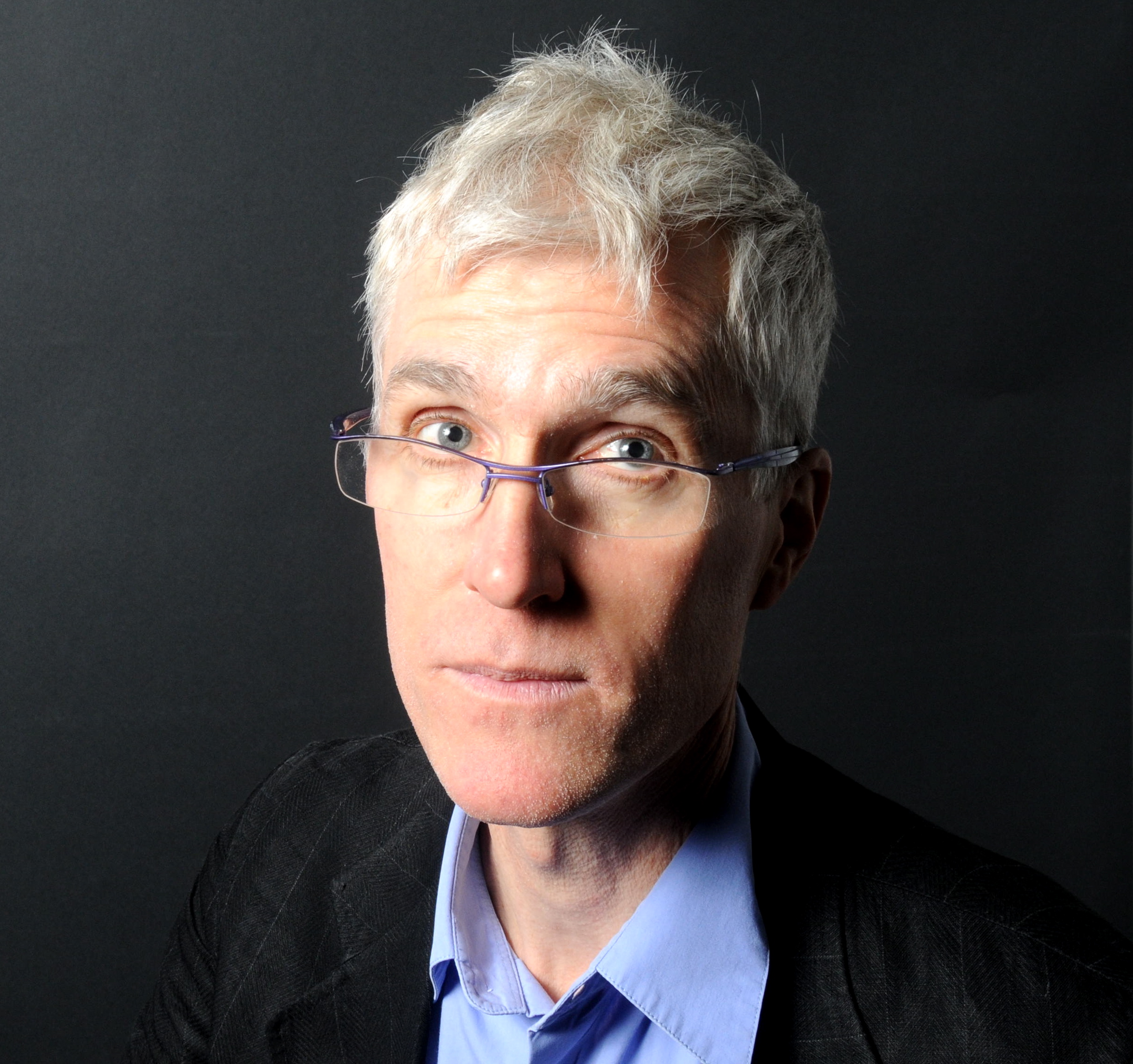 Vase-Painting: Myth and Performance (1992), Capturing Troy: The Narrative Functions of Landscape in Archaic and Early Classical Greek Art (2001), and The Image of the Artist in Archaic and Classical Greece: Art, Poetry, and Subjectivity (2016). He is also the editor of Material World: The Intersection of Art, Science, and Nature in Ancient Literature and its Renaissance Reception (2021), and a coeditor of Phenomenology and the Painted Vase (2026). His lecture is based on research for a book on the relationship between composite creatures and scientific thought in ancient Greece.