A Rare Ottoman Edition Acquired by the Gennadius Library
Every Greek has heard of Alexandros Ypsilantis, of his early career in the service of Russia and of his role in initiating the Greek War of Independence in 1821. The name of his father, Konstantinos Ypsilantis, is less often remembered but he was a remarkable man in his own right. Konstantinos and his father, the old Alexandros Ypsilantis, were prominent Phanariots. They both served the Porte as Grand Dragomans and Voivodes of Moldavia and Wallachia. Konstantinos was particularly renowned for his excellent knowledge of Turkish, Arabic and Persian. In 1806 when Konstantinos was Voivode of Wallachia a shift in the alliances between France, Russia and the Ottoman Empire prompted him to flee to Russia. His father, the older Alexandros, was promptly executed and his son, the younger Alexandros, found a different future in Russia. But until that point Konstantinos had been an eminent Ottoman.
The Gennadius Library has recently acquired a rare copy of a fine example of early Ottoman printing which exemplifies Konstantinos’s command of Ottoman Turkish and his contribution to Ottoman military engineering.
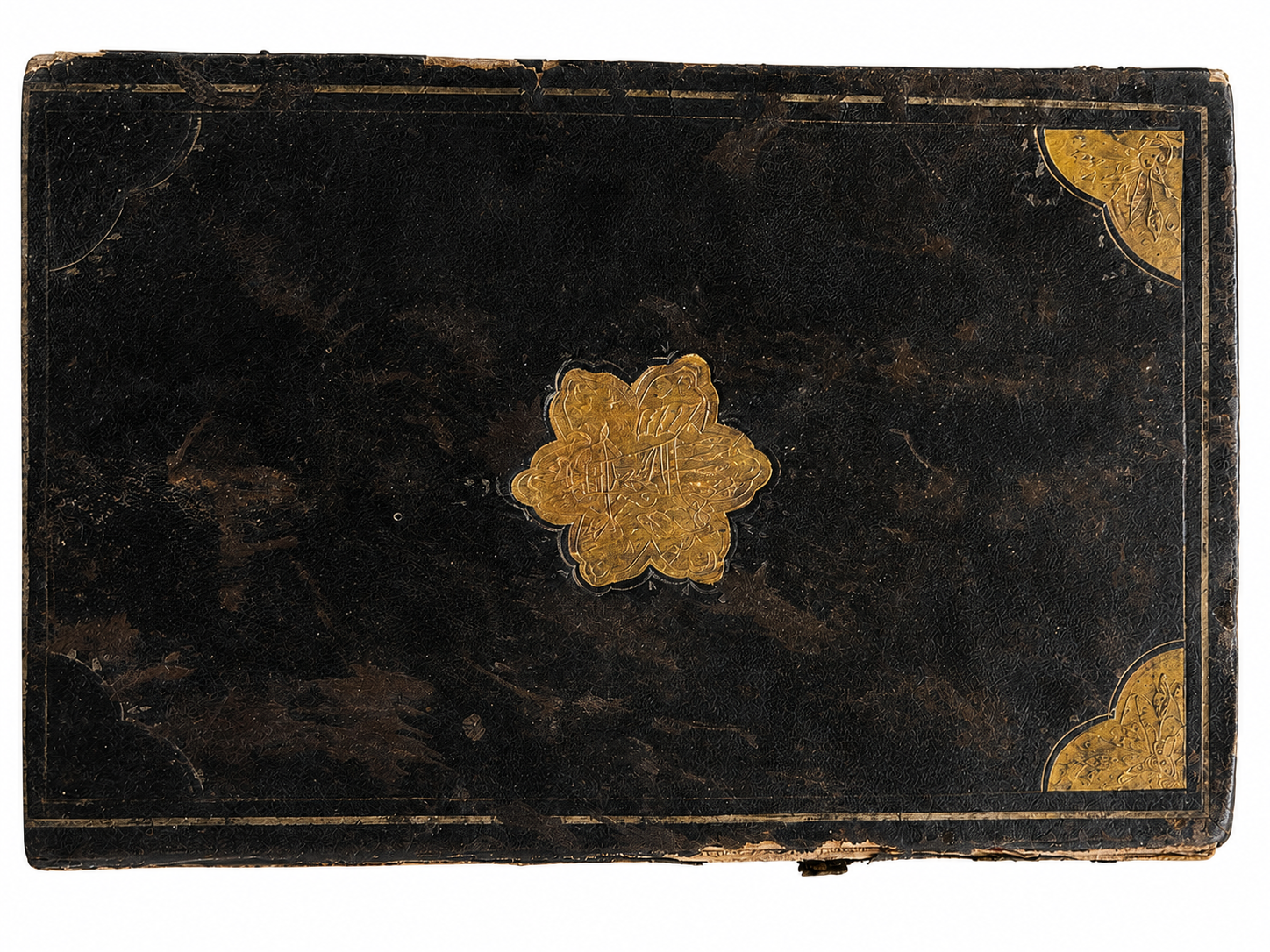
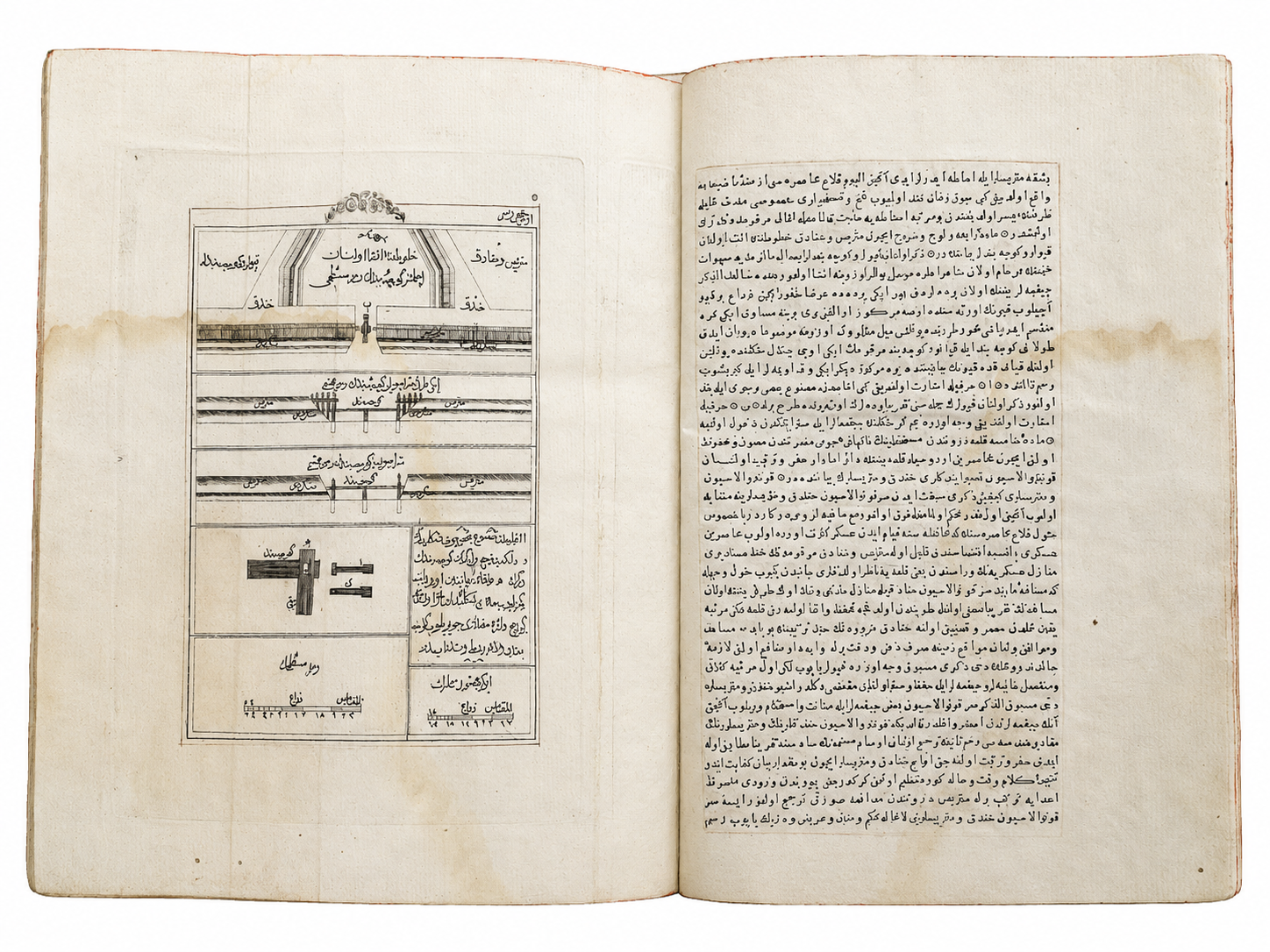
The book is a translation of the Traité de l’ attaque et de la défense des places by Sébastien Le Prestre, Marquis de Vauban (1633-1707), the foremost military engineer of his time. Vauban’s innovations remained “ state of the art” for more than a century and his mausoleum in Les Invalides remains a visible testament to the esteem of Napoleon himself. The Traité was first printed in The Hague in 1737. It was followed in 1742 by a volume containing two related works a Traité pratique des mines and a Traité de la guerre en general. The former of this pair is attributed to Vauban himself, although the authorship is now disputed; the latter is attributed anonymously to “un officier de distinction”.
All three works were translated into Ottoman Turkish. They were printed in separate volumes issued in successive years between 1206 and 1208 AH (1791/2 – 1793/4 CE). The translations are illustrative of a more general trend of westernising reform, particularly in the military sphere, and epitomised by the Nizam-i Cedid (“new order”) of Selim III who came to the throne in 1789. Indeed, in a subsequent Hatt-ı Hümâyûn (Imperial Decree) Selim boasts of having commissioned the translations of Vauban himself.
The Bavarian State Library in Munich holds the Ottoman translations of the Traité pratique des mines and the Traité de la guerre en general and has made them available in digitised form online. The books have no title pages as such and the name given to the latter, Fenn-i Harb (The Science of War) has sometimes been given to the translation acquired by the Gennadius. But it is obvious merely from the comparison of the folding plates and other diagrams that this, apparently the only publicly accessible copy, is a translation of the 1737 edition of the Traité de l’ attaque et de la défense des places.
The three translations were printed by Reşid Bey who had apparently salvaged the equipment of the first Ottoman printing press. This had been set up by the Hungarian convert, Ibrahim Müteferrika, and operated between 1727 and 1742. The researches of Kemal Beydilli revealed that Reşid’s publication of the translations was a commercial flop: most of the 300 or so copies printed of each remained unsold with the result that he printed nothing else.
The name of the translator nowhere appears in the text. But credit for it to Konstantinos Ypsilantis is given in the Berat (letter of appointment) of 1796 appointing him Grand Dragoman, the text of which is quoted by Beydilli.
More information, including the involvement of another translator, Ioannes Karadzas, emerged in 2013 from a manuscript of 1827 which had remained unpublished until then. This is the Analyse raisonée de l’ ouvrage intitulé Charte Turque by Iacovaky Rizo Néroulos, who was in a position to know. To quote him in English translation:
“When Prince Constantine Hypsilanti was charged on the express order of Selim with the translation of the three volumes of Vauban, he encountered almost insurmountable difficulties in finding terms of art. Helped by his cousin, Prince John Caradza, he attempted by means of continual enquiries among these functionaries in the war department to find the right words and the technical terms. These efforts were in vain! These gentlemen were quite unable to assist him. Nonetheless, thanks to their perseverance and to their profound knowledge of oriental languages Hypsilanti and Caradza succeeded in translating Vauban, finding technical terms which existed already and creating others either in Turkish or Arabic or Persian.”
This recent accession to the Gennadius will allow researchers to explore a remarkable contribution not just to Ottoman letters but to the Ottoman language by a Greek.
References:
Beydillli, Kemal. 1995. Türk Bilim ve Matbaacılık Tarihinde Mühendishâne Matbaası ve Kütüphânesi (1776-1826), İstanbul: Eren
Rizo Neroulos Yakovaky. 2013. Analyse raisonée de l’ ouvrage intitulé Charte Turque. Edited and translated by Bertrand Bouvier and Anastasia danae Lazaridou, Athens: MIET