
Edwards Capps at the American Red Cross Headquarters, Athens, ca. 1918-1919. American School of Classical Studies at Athens, Archives.
Edward Capps and the Enduring Power of Legacy
On a warm August day in 1950, news of Edward Capps’s passing traveled quietly between Princeton and Athens. The New York Times remembered a distinguished classicist and former diplomat, noting that he was among the most beloved foreigners in Greece. In Greece itself, the sentiment carried even deeper meaning, reflecting a life devoted not only to scholarship but to partnership, generosity, and cultural stewardship.
More than seventy-five years later, the American School of Classical Studies at Athens continues to reflect his vision and his belief that scholarship is sustained across generations.

Edward Capps, Chair of the ASCSA Managing Committee, ca. 1920. American School of Classical Studies at Athens, Archives.
Edward Capps was born in Illinois in 1866 and rose to become one of America’s leading scholars of Greek literature, teaching at the University of Chicago before joining Princeton University, where he spent nearly three decades shaping the field of classical studies. Yet his life cannot be measured by academic titles alone. His true intellectual home was the American School, where he first arrived as a student member in the 1890s and where his lifelong devotion took root.
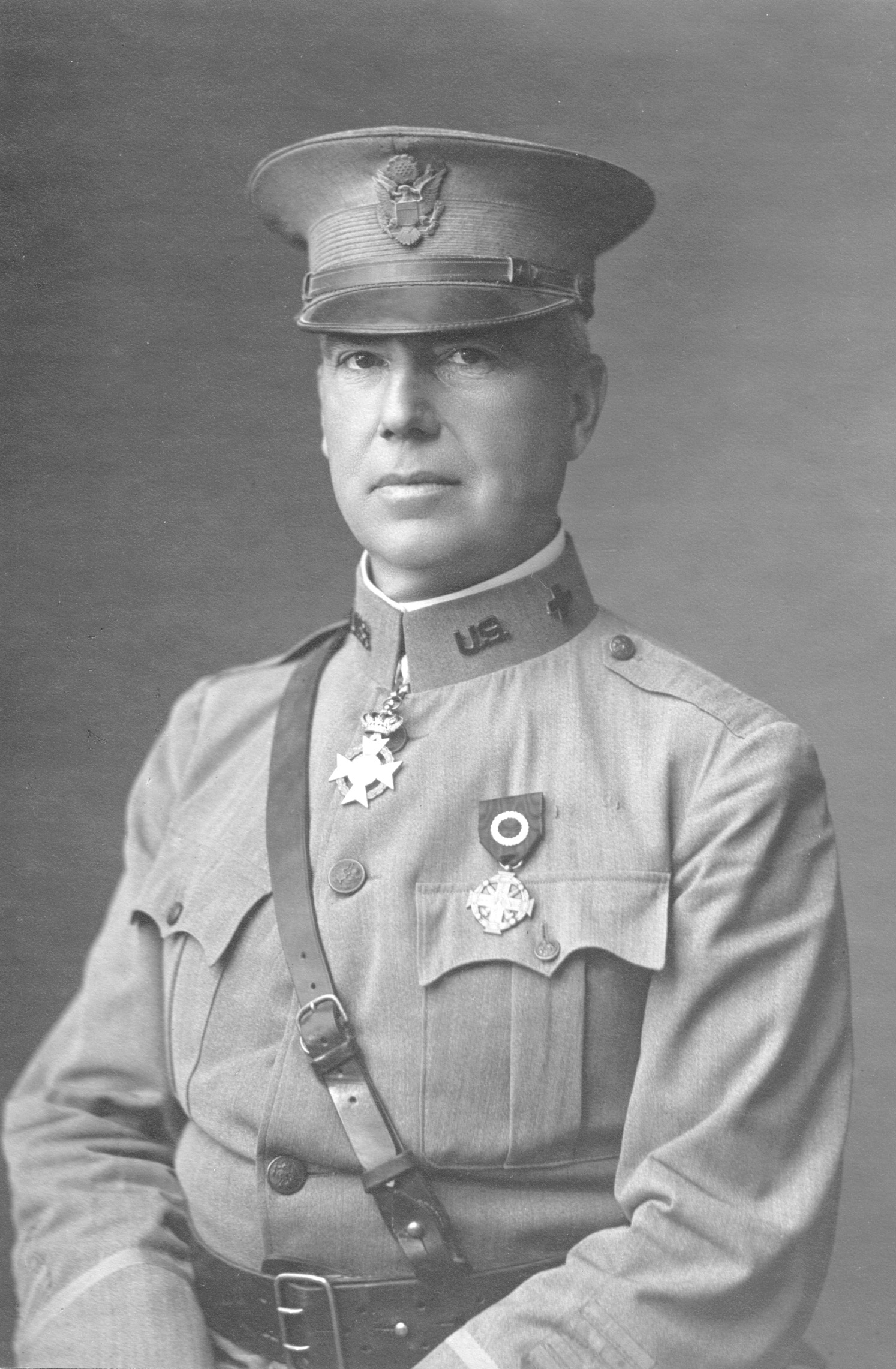
Edward Capps, Commissioner of the American Red Cross Greek Commission, 1918. American School of Classical Studies at Athens, Archives.
Capps joined the School’s Managing Committee in 1908 and remained an active leader for more than four decades, including over two decades as chairman. At a time when the School faced financial uncertainty, he stepped forward with tireless energy, cultivating donors, strengthening endowment support, and advocating for the School’s long-term future. His efforts stabilized and expanded the School at a pivotal moment, earning him the enduring reputation as its “Second Founder.”
His leadership left a lasting imprint across Athens and beyond. Capps played a central role in securing the gift and opening of the Gennadius Library in 1926, helping establish one of the world’s great collections devoted to Greek history and culture. Equally consequential was his leadership in advancing the excavation of the Athenian Agora, a landmark archaeological project that continues to shape classical scholarship.
Capps’s commitment to Greece extended beyond academia. In 1920 he served as United States Minister to Greece and Montenegro during a period of national upheaval. Through his work with the American Red Cross, he helped coordinate relief efforts for refugees and communities affected by war, earning Greece’s highest honors. Scholar, diplomat, humanitarian, and advocate, Capps embodied a form of Philhellenism grounded in action as much as admiration.

Edwards Capps at the American Red Cross Headquarters, Athens, ca. 1918-1919. American School of Classical Studies at Athens, Archives.
What distinguished Edward Capps most profoundly was his understanding that institutions endure through thoughtful generosity. He believed that the American School’s mission, advancing research, preserving cultural heritage, and fostering dialogue between Greece and the wider world, required support that extended beyond any one lifetime.
In 2009, the American School launched the Edward Capps Society to honor individuals who, during their lifetimes, provide for the future of the School or its program centers, including the Gennadius Library, through estate plans or significant gifts to the permanent endowment. Named in memory of Capps and inspired by his example, the Society reflects the values that shaped his life: foresight, generosity, and commitment to permanence.
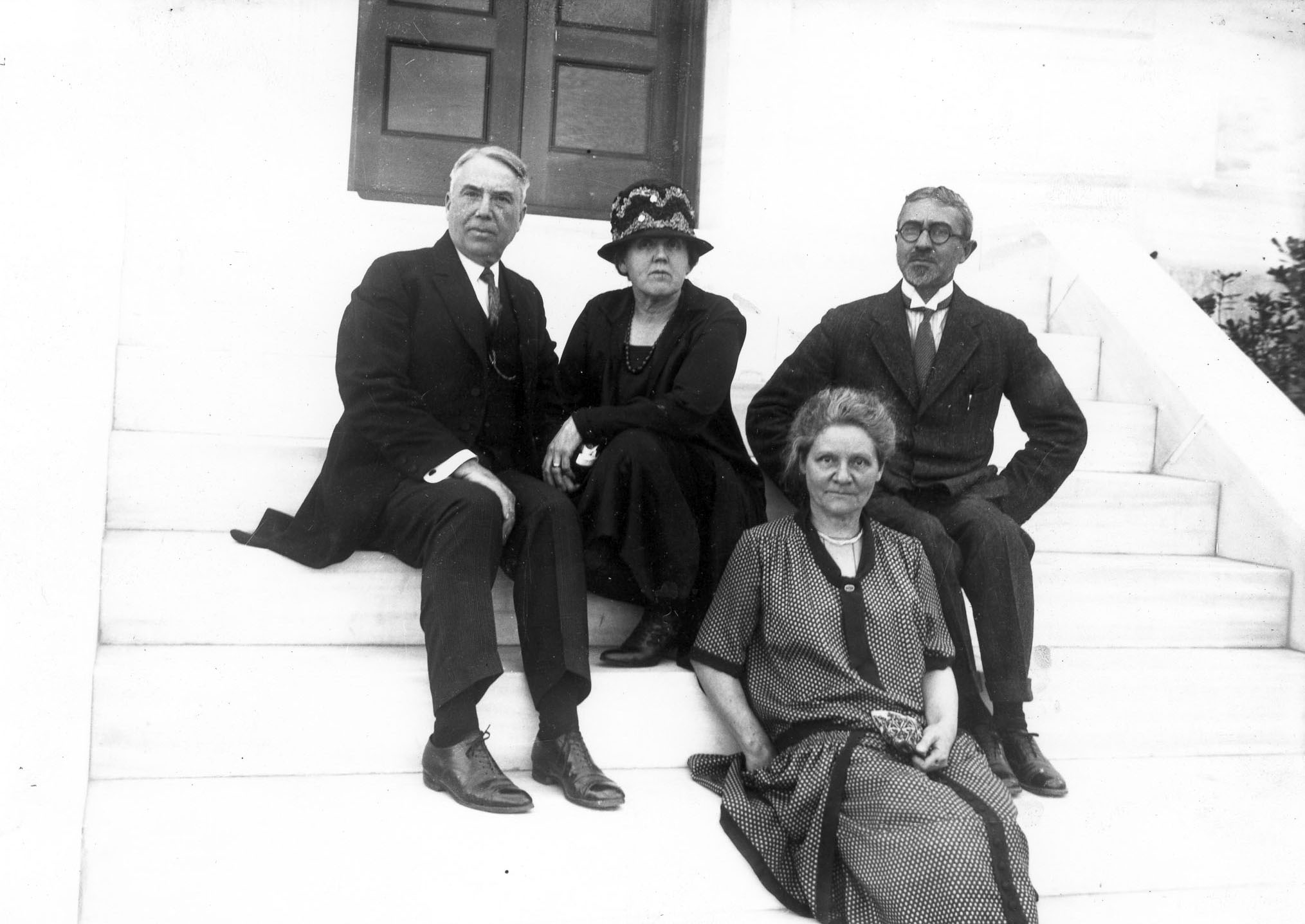
Edward and Grace Capps, Gilbert and Susan Scoggin, outside the newly-built Gennadius Library, ca. 1926. American School of Classical Studies at Athens, Archives.
As the American School looks toward its next century, Edward Capps offers more than historical inspiration. He offers a model of purposeful generosity. His life reminds us that individuals can shape communities of learning and that philanthropy can sustain scholarship for generations yet to come.
To make a legacy gift is to become part of that tradition. By including the American School in your estate plans, you help sustain excavations that uncover new histories, libraries that preserve knowledge, and fellowships that empower future scholars.
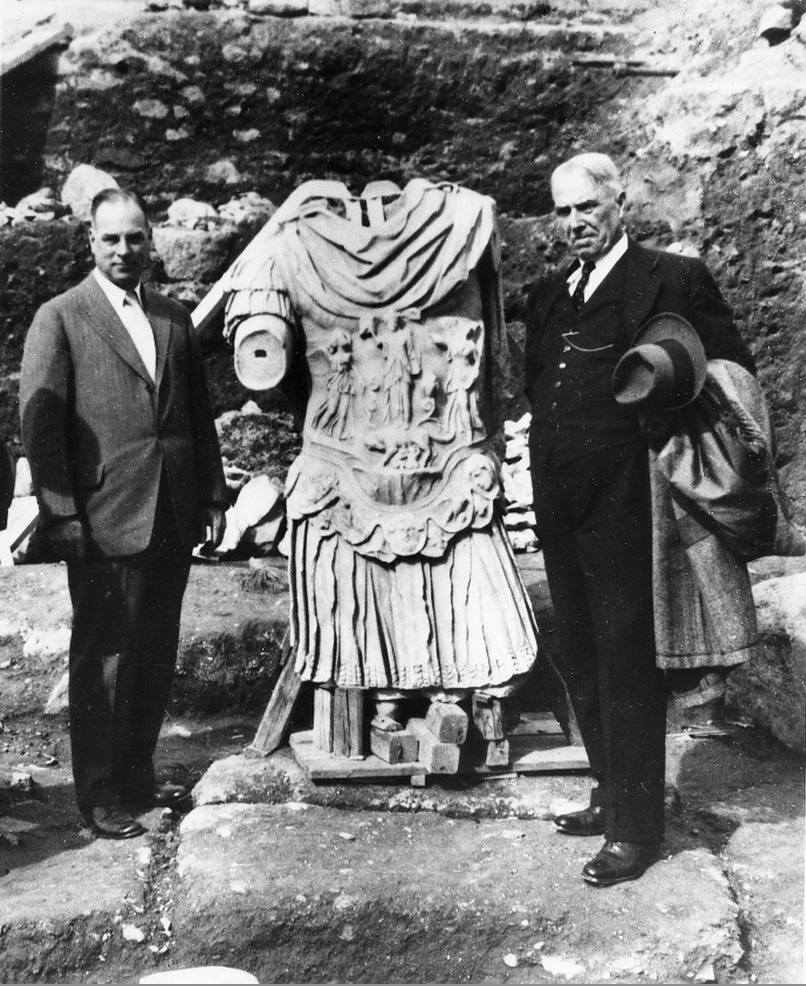
Leslie Shear and Edward Capps by the statue of Hadrian uncovered in 1931, February 1932. American School of Classical Studies at Athens: Agora Excavations.
Edward Capps believed that the work of the American School belonged to the future. Through thoughtful legacy giving, that future continues.
For more information about making a legacy gift and becoming a member of the Edward Capps Society, please contact Andrew Federico at afederico@ascsa.org or 609-454-6810