ASCSA Alumni Profiles
Check back soon for more inspiring stories of ASCSA alumni contributions to the study of Greek world and beyond.
Kristian Lorenzo
Chair, Department of World Languages, The Meadows School
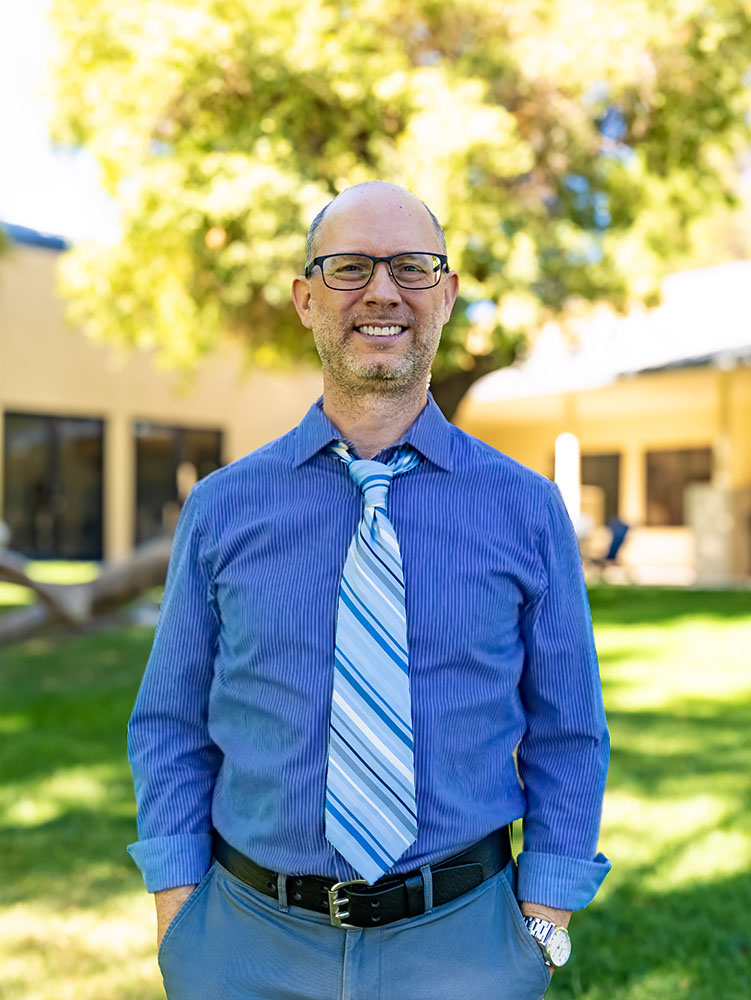 For Kris Lorenzo, the most rewarding part of teaching high school Latin is watching students change over time. “It’s nice to see that progression,” he says, from the restless energy of ninth graders to the more thoughtful students they become by graduation. That long view of growth and transformation now shapes his work as Chair of World Languages at The Meadows School in Las Vegas.
Kris’s own path has been far from linear. After beginning college in the early 1990s, he took a break for several years before returning to higher education with a renewed focus on ancient history. At the University of Buffalo, a course in Greek archaeology drew him to the Classics department, where he found both intellectual engagement and a strong sense of belonging. “I felt at home in the Classics Department,” Kris says, in its focused and specialized academic environment.
His experience at Buffalo led him to pursue graduate study in Classics at the University of Wisconsin-Madison. Encouraged by his advisors there, Kris began exploring new opportunities abroad, applying to programs in both Rome and Athens, but he ultimately chose the American School of Classical Studies for its broad range of resources and opportunities for graduate students. After first attending the Summer Session led by Mark and Mary Lou Munn, Kris took full advantage of the School’s programs as a Regular Member, an Associate Member, and an excavator at the Athenian Agora.
The year-long program allowed for deep engagement with individual sites and immersion in the international scholarly community. Though Kris arrived at the School without a defined dissertation topic, his exposure to archaeological features within their physical and cultural contexts helped him refine his interests. Through careful notetaking during site visits and conversations with scholars in Athens, Kris ultimately developed his dissertation topic on naval victory monuments.
After completing his PhD and entering a challenging, recession-era job market, Kris held a series of visiting positions in Illinois and Virginia before turning to Carney Sandoe, a placement service for independent schools. With their assistance, he secured an interview at The Meadows School while working as a trench supervisor for the Lechaion Harbor Project in the summer of 2017. Prepared for the possibility – “I had brought a dress shirt and tie, just in case!” Kris recalls – he interviewed remotely from the Corinth dig house and made a swift transition to teaching high school Latin in Las Vegas that fall.
Since joining The Meadows School, Kris has grown into his role and now serves as the Chair of World Languages, while maintaining his connection to archaeological fieldwork as a contributor to a forthcoming article on the Lechaion Harbor Project in Hesperia. Reflecting on his career, Kris takes pride in its non-traditional trajectory. “I think it’s much harder to do something different than to take the traditional route,” he says. That adaptability led to a stable and fulfilling career in Classics that continues to bridge scholarship and teaching.
Julie Bentz
Former Attorney, Social Security Administration
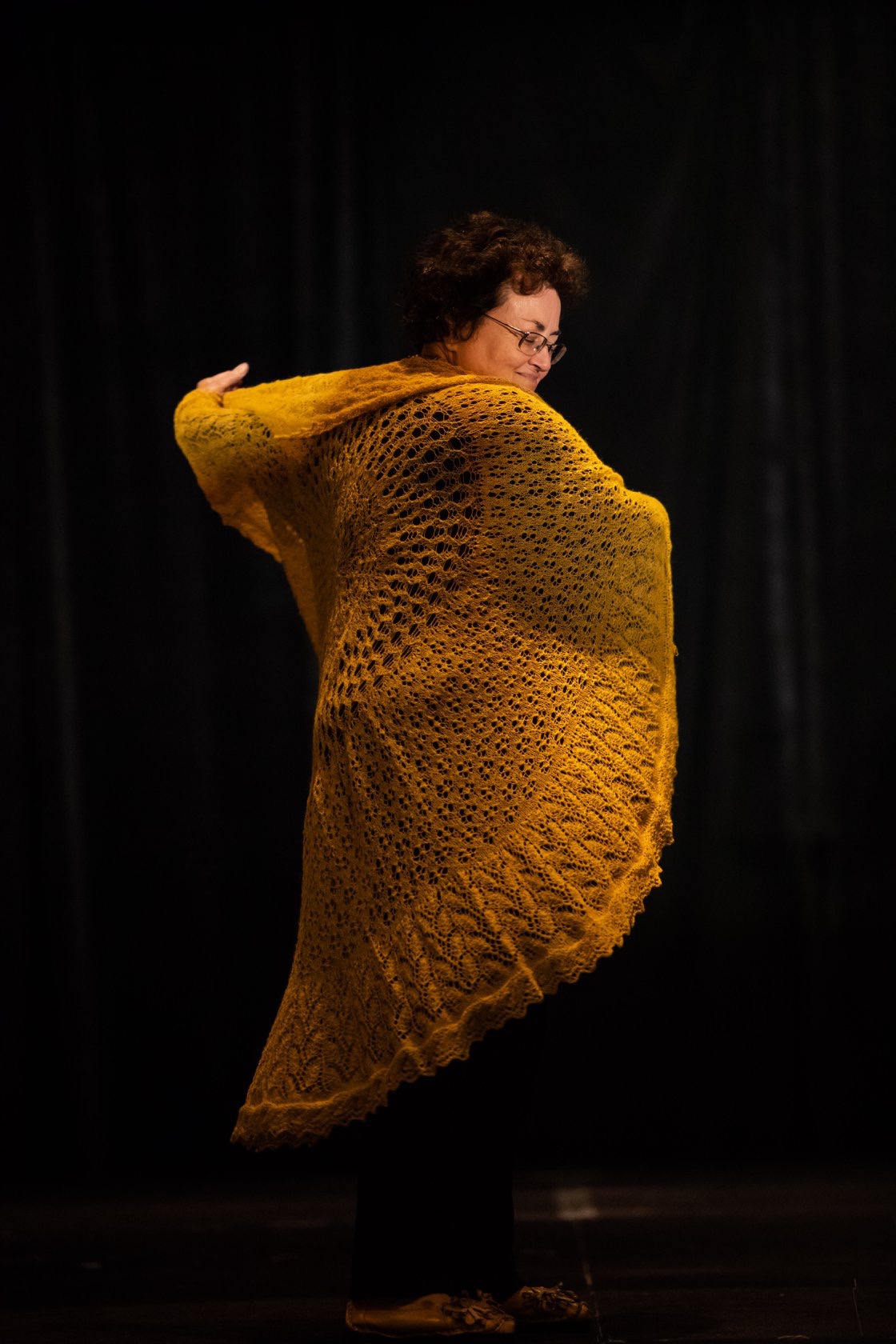 Julie Bentz’s path to Classics began in childhood, when a Golden Book of The Odyssey sparked an interest in Greek mythology. Although she initially imagined a future in politics or law, a freshman seminar in classical civilization at Cornell University changed her course. Encouraged by mentors there, Julie went on to pursue a graduate degree at the University of Cincinnati, where she developed an interest in Greek vase painting as a student of Cedric Boulter.
When Julie came to the American School as a Regular Member in 1978–79, the combination of scholarship, mentorship, and strong sense of community there shaped her experience in lasting ways. The academic program broadened her horizons, particularly the trip to western Greece and sites near Ioannina, and while excavating at Corinth that year, Julie got involved in work with black gloss and plain pottery which became the focus of her dissertation.
A couple years later, Julie returned to complete her dissertation research at Corinth, a year which proved to be especially memorable. Julie worked closely with Charles Williams, then Director of the excavations, Nancy Bookidis, Co-Director, and Stella Buzaki, Conservator, whose deep knowledge of the site was key in guiding her research, but the informal conversations over breakfast and dinner made life at Corinth truly rewarding. “If I were to repeat one year of my life,” she reflects, “it would probably be that year in my late 20s, when I was at Corinth doing dissertation research.”
A major event that marked that year, however, was the Corinth earthquake of 1981. The magnitude 6.6 earthquake struck right as Julie was getting ready for bed. “I ended up rushing outside in a summer robe, barefoot, but clutching my dissertation notes, because I’d had the cautionary tale of Charles Williams losing his dissertation in a fire!” Julie recalls. While decluttering her home recently, Julie found a 20-page letter that she had written to her parents about the experience, an archive-worthy first-hand account of living through the earthquake.
After completing her PhD, Julie held a series of teaching positions in the United States before accepting a lecturer position at Victoria University of Wellington in New Zealand. Although she loved the experience, family considerations eventually drew her back to the United States, where she made a bold pivot into law. As she describes it: “I put in my notice at Victoria, quit teaching on a Friday, got on a plane on Saturday, and started law school on Monday.” Despite the shock of the abrupt transition, Julie discovered that the skills honed through academic training – careful research, close attention to detail, and persistence—translated naturally into legal practice. Julie went on to spend nearly two decades as an attorney with the Social Security Administration, where much of her work involved complex research and writing, defending agency decisions, and safeguarding public funds.
Since retiring in 2024, Julie has remained actively engaged with archaeology and preservation through volunteer work. As a Chicago resident, she is involved with the Illinois Association for Advancement of Archaeology, where she contributes to a publication called Places of the Past, a guidebook that promotes archaeological sites and exhibits throughout the state. Like many alumni, Julie maintains the connections she made at the American School, and she also serves as a current member of the Alumni Council. Though her career took her far from Greece geographically and professionally, her ties to the School—and to the curiosity that first brought her there—remain strong.
Chris Motz
Manager of Digital Assets, Kelsey Museum of Archaeology
 Chris Motz wanted a career that would not make him stick to a single subject, and Archaeology provided that opportunity. As a graduate student at the University of Cincinnati, Chris focused on Roman Archaeology, but in addition to his academic work, he fostered his digital skills by managing the database for the Pompeii Archaeological Research Project: Porta Stabia (PARP:PS) and designing the recording system for the Tharros Archaeological Research Project, where he is still involved today. He then applied those skills to his own dissertation, which utilizes complex datasets to analyze the archaeological remains of fish-salting and cloth treatment workshops of the Roman period.
Although his graduate research focused primarily on the Roman west, Chris participated in the ASCSA Summer Session led by Lee Brice and Georgia Tsouvala in 2014, which provided a brief but highly beneficial immersion in Greek Archaeology.
“It was extremely valuable for comprehensive exams in grad school and equally, if not more valuable in the years after grad school [for teaching courses in] Greek Art and Archaeology or Greek literature in translation,” Chris says. “Having first-hand experience with those objects, spaces, and buildings was really helpful.”
Chris was quickly drawn to an opportunity to do more with the digital aspects of archaeological research, however. Now working as the Manager of Digital Assets at the Kelsey Museum of Archaeology, Chris manages the collections database and physical archives there. Although he has no formal training in computer science, Chris had developed IT skills through various jobs, from working at the IT help desk as an undergraduate to doing contract tech support or filling various roles at an Apple store before beginning his PhD, and he finds the contributions that he can make in digital archaeology to be especially gratifying.
“One of the challenges I was starting to realize while in a more traditional academic role was that I wasn’t able to use my skills to their fullest extent,” Chris says. “I can make much more of an impact on the field doing this kind of work.” One of his recent projects involved publishing the raw data for 3D models of objects in the museum and integrating it with their public database, making it more accessible. This will allow future researchers to reprocess the data using different methods and use it to ask new questions, so that the first version of the model is not the final one.
This view to the future carries over into Chris’s interactions with students at the University of Michigan, whom he advises on data management for their research projects and helps them find solutions that are customized to their needs. “One of my other goals is to use this role to raise the overall level of technical ability [in the field] for people who will go on to be project directors and equip them as much as possible to do these things themselves.”